
MAR 13: The UK’s new order record-keeping framework
UK MARKETS REGULATION – Replacing the legacy UK MiFIR Article 25 / RTS 24 framework Executive view The FCA is moving order record-keeping into a new Handbook chapter, MAR 13. This replaces the requirements that sat under UK MiFIR Article 25 and RTS 24. The change is real, not cosmetic. Firms and trading venues will …
Read more "MAR 13: The UK’s new order record-keeping framework"
Technical Breakdown: Navigating FCA CP26/34 and the Post-MIFIR Reporting Era
The Financial Conduct Authority (FCA) has formally released Consultation Paper CP26/34, providing the industry with the technical and transitional roadmap required to migrate toward the UK’s new, streamlined transaction reporting framework. Following the policy foundations laid out in PS26/15, this consultation serves as an operational blueprint for investment firms, trading venues, and Approved Reporting Mechanisms …
Read more "Technical Breakdown: Navigating FCA CP26/34 and the Post-MIFIR Reporting Era"
Reg-X Named a Chartis RiskTech100® 2027 Disruptor in Regulatory Risk and Reporting
We’re delighted to share that Reg-X has been named a Disruptor in the Regulatory Risk and Reporting category of Chartis Research’s RiskTech100® 2027. RiskTech100 is Chartis’ annual independent study of the major players in risk and compliance technology, so this one means a lot to everyone at Reg-X. What makes it particularly meaningful is the …
Read more "Reg-X Named a Chartis RiskTech100® 2027 Disruptor in Regulatory Risk and Reporting"

REMIT II – The growing focus on algorithmic trading
One interesting development in the REMIT II landscape is the increasing regulatory focus on algorithmic trading. In its latest REMIT Quarterly, published in August 2026, ACER highlights how its market surveillance is adapting to the growing use of automated trading. ACER specifically notes that algorithmic trading can operate at speeds and volumes beyond human capacity, …
Read more "REMIT II – The growing focus on algorithmic trading"
Regulatory Reporting Spotlight: Beyond Submission
Getting a report accepted is only part of the job. Knowing it is accurate, complete, and supported by the right controls is becoming just as important. Across regulatory reporting, the focus is shifting from successful submission towards accuracy, data quality, reconciliation and assurance. In practice, reporting assurance means being able to demonstrate that regulatory reports …
Read more "Regulatory Reporting Spotlight: Beyond Submission"
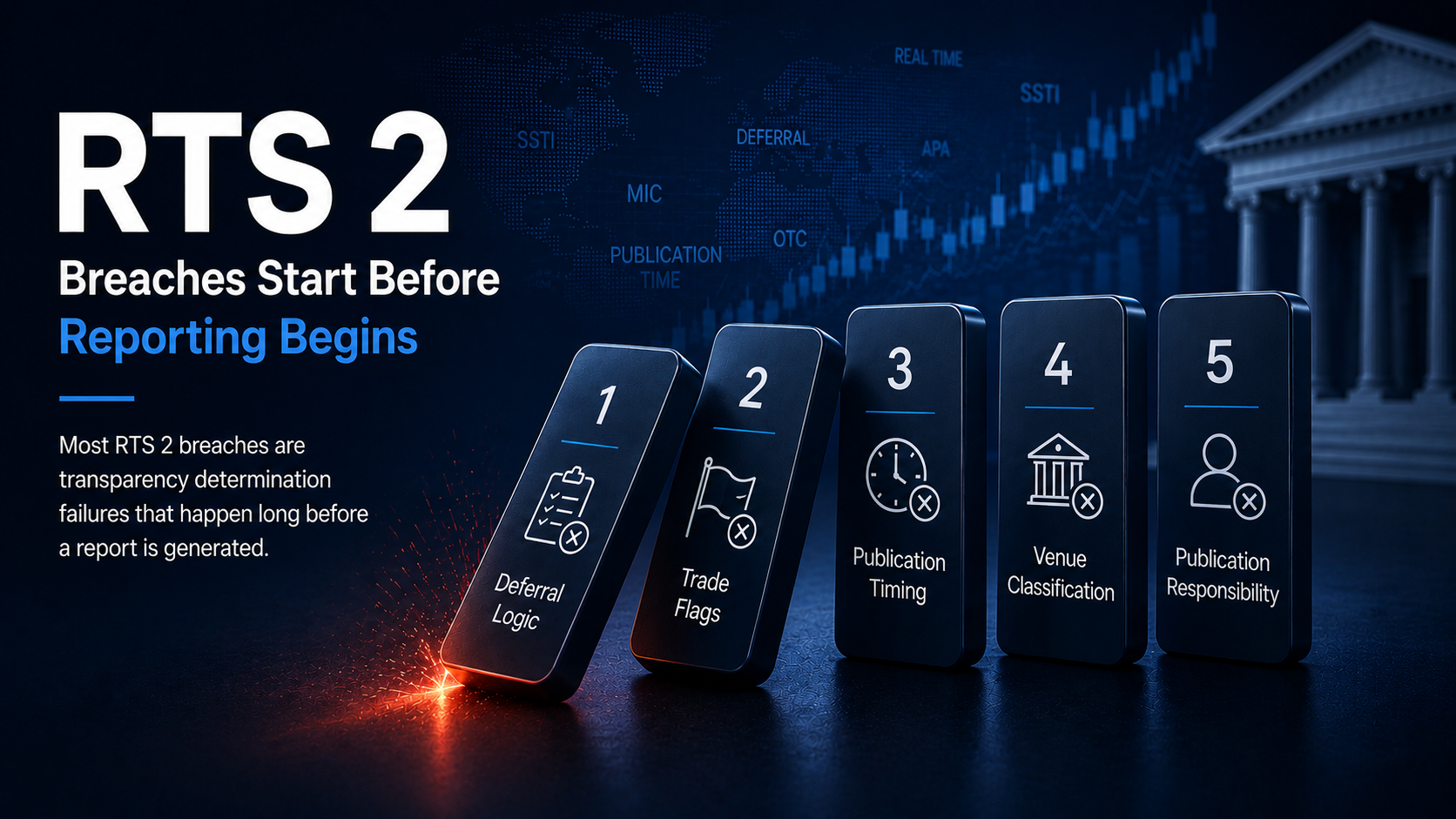
MiFID RTS 2 Compliance Starts Before Reporting Begins
Most RTS 2 breaches are not reporting failures. They are transparency determination failures. Firms get deferrals, flags, publication timing, or publication responsibility wrong before a report is ever generated. Drawing on our experience delivering regulatory reporting accuracy through RegAssure, here are the ten most common RTS 2 issues we encounter. 1. Deferral Eligibility and Deferral …
Read more "MiFID RTS 2 Compliance Starts Before Reporting Begins"
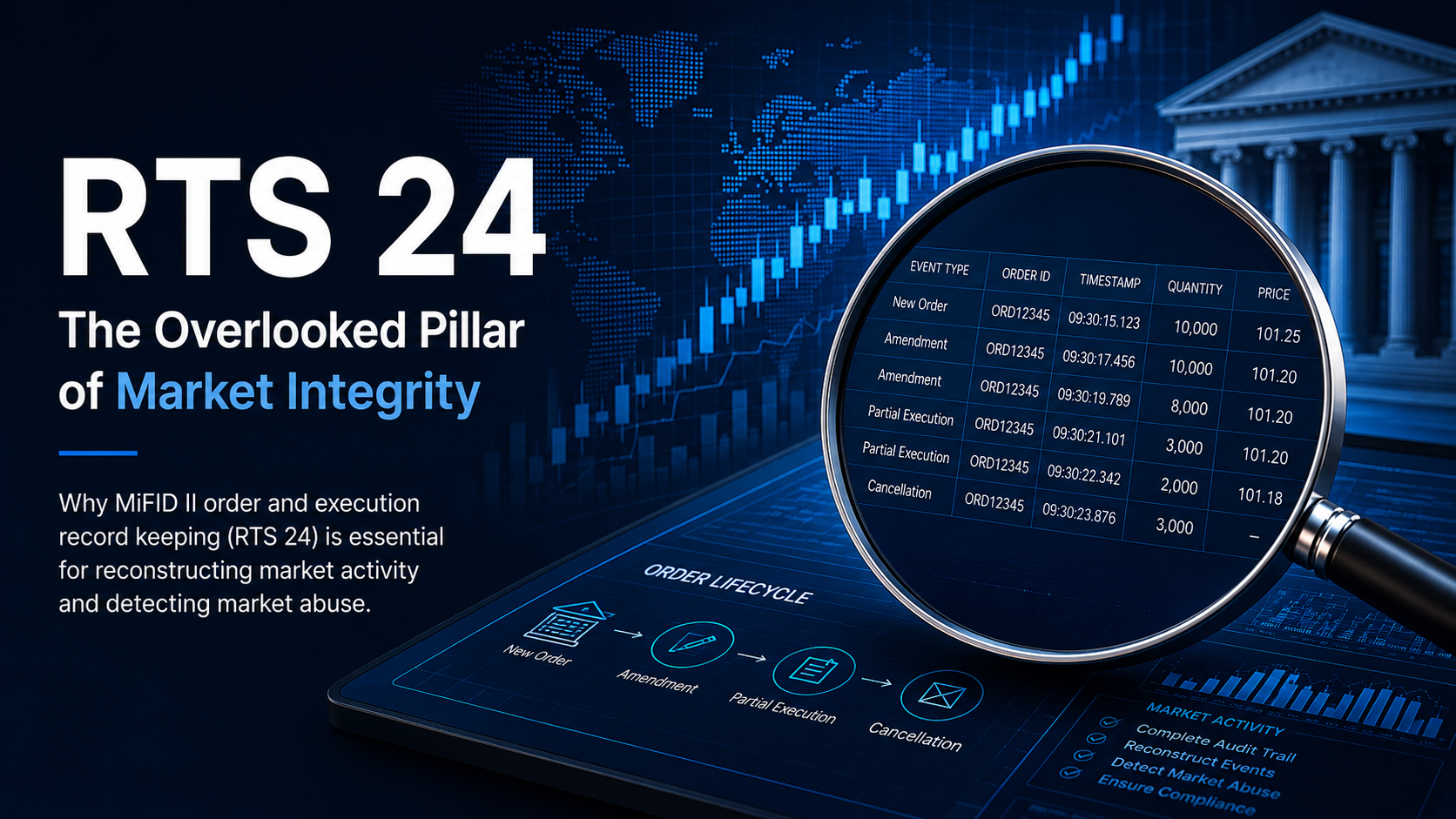
RTS 24 Under MiFID II Explained: A Practical Guide to Order and Execution Record Keeping
Introduction Within the European Union’s MiFID II regulatory framework, much attention is given to transaction reporting under MiFIR Article 26 and transparency reporting. However, one of the most important, yet often overlooked, regulatory obligations concerns orders & execution record keeping. This obligation is defined as Commission Delegated Regulation (EU) 2017/580 (commonly referred to as RTS …
Read more "RTS 24 Under MiFID II Explained: A Practical Guide to Order and Execution Record Keeping"
The biggest SFTR risk in 2026 isn’t reporting – It’s assuming regulators have stopped looking
SFTR: The “Ignored Child” of Regulatory Reporting? Think Again. For years the Securities Financing Transactions Regulation (SFTR) has often been regarded as the quieter, odd sibling of the regulatory reporting family. EMIR has commanded headlines and alongside MiFID and MiFIR have undergone major reviews. Transaction reporting remains firmly in regulators’ sights. Meanwhile, SFTR has sometimes …

REMIT II Implementation: Key Reporting Requirements, Changes and October 2027 Readiness
While October 2027 may still seem far away to many firms, preparing for the reporting requirements under REMIT II will likely commence much sooner than the actual changes to take place. The implementation timeline is already beginning to take shape: Q4 2026: ACER TRUM and XML Schemas Finalised January 2027: ACER Technical Testing Environment Opens October 2027: New REMIT …
Read more "REMIT II Implementation: Key Reporting Requirements, Changes and October 2027 Readiness"

Reg-X Recognised for Strengthening Regulatory Reporting Assurance and SME Advisory Excellence
Reg-X Innovations has been recognised as the winner of the “Best Regulatory Consultancy – Europe” award at the RegTech Insight Awards Europe 2026, reflecting our work in helping firms strengthen regulatory reporting assurance, controls, and operational oversight across global reporting regimes. The recognition reflects increasing industry focus on reporting assurance, operational controls, periodic reporting, record keeping, …
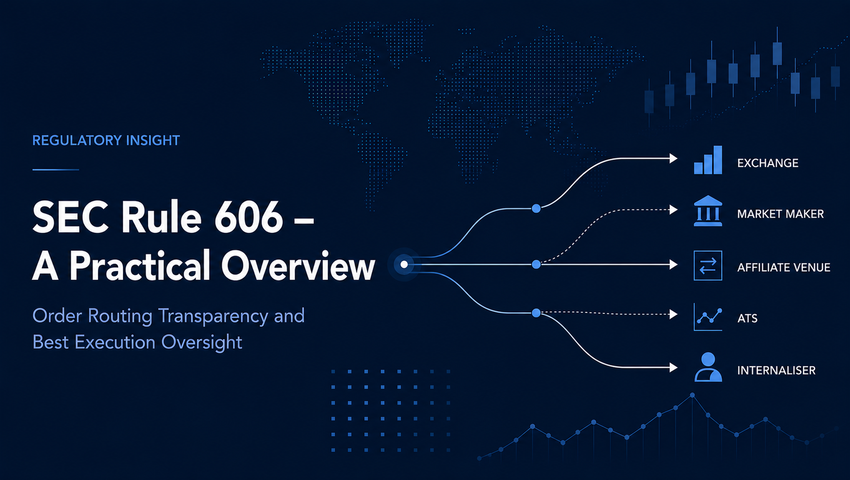
SEC Rule 606 – A Practical Overview
Introduction SEC Rules 605 and 606, established under Regulation NMS, form the backbone of transparency in the U.S. equity markets. Collectively, they provide regulators and investors with insight into execution quality and order routing behaviour. Among them, Rule 606(a) carries particular relevance for senior management, as it directly exposes a firm’s routing strategy, conflicts of interest, and venue relationships to public scrutiny. From the reporting …

Case Study: Delivering EMIR Refit and Multi-Regime OTC derivative Reporting for one of the Largest Global Asset Management Firm
The Challenge One of the largest asset management firms operating across the EU and UK required a more structured approach to regulatory reporting as complexity increased. The onboarding involved multiple technical and operational challenges: Aligning data flow and reporting structures across regions and regulatory frameworks Establishing secure access protocols and infrastructure Handling manual touchpoints, making it increasingly difficult to maintain consistency …